Hello all, as this week comes to a close I thought that a day in the life might be useful for anyone who stumbles across this blog looking for information on what it’s like to be an exchange student in Poitiers. I’ve laid it out from morning to evening, I hope it’s useful for anyone wanting more information!
Get Up And Go!
7.15 – 8.15
My days start early (for a student): on Mondays and Wednesdays my first lecture is at 9am and 8.30 on Tuesdays. So I tend to get up around 7 to 7.15, put my coffee on to brew, shower, get ready, and go. I don’t wear makeup really, apart from for special occasions, so it’s really just a matter of getting dressed, pouring my coffee in my flask, and making sure I have everything I need for the day in my bag. I live very close to two bus stops, which is great, and the number 1 bus from centre-ville to campus comes around every 3 to 5 minutes on weekday mornings, so if you arrive just as one is leaving you usually won’t have long to wait for the next one. As a result of this frequency, the busses also aren’t too packed; there are lots of other students on them, of course, but I have usually been able to find a seat. I’ve never had a bus so busy in the morning that I have been physically unable to get on, let alone find a seat, as was frequently the case on the Picadilly line in London. No more arriving late to lessons!
The Bus
8.15-8.30
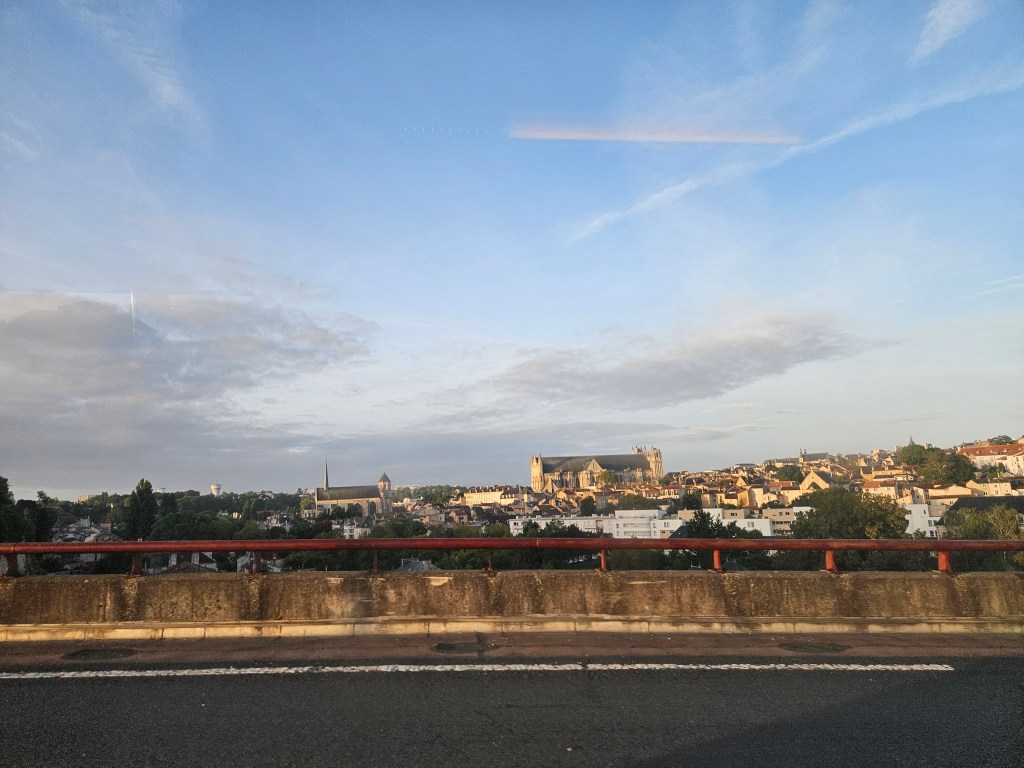
Pretty uneventful, but the autumn light at the moment is beautiful in the mornings. In Poitiers the busses are run by Vitalis, with a monthly pass for those under 29 costing 29€ (a far cry from the £137 monthly student Oyster fee, which is painful whenever TFL takes it out of my account), and even less if you are a recipient of CAF (29€ for the whole YEAR). If you’re looking for a nice view over the valley, catch the 2 from Victor Hugo and sit on the right side as you swing past Park Blossac. It takes about 15 minutes to get from Place LePetit or Notre Dame to Cite Universitaire, the closest stop to the Lettres et Langues building.
Lecture One
9.00-11.00
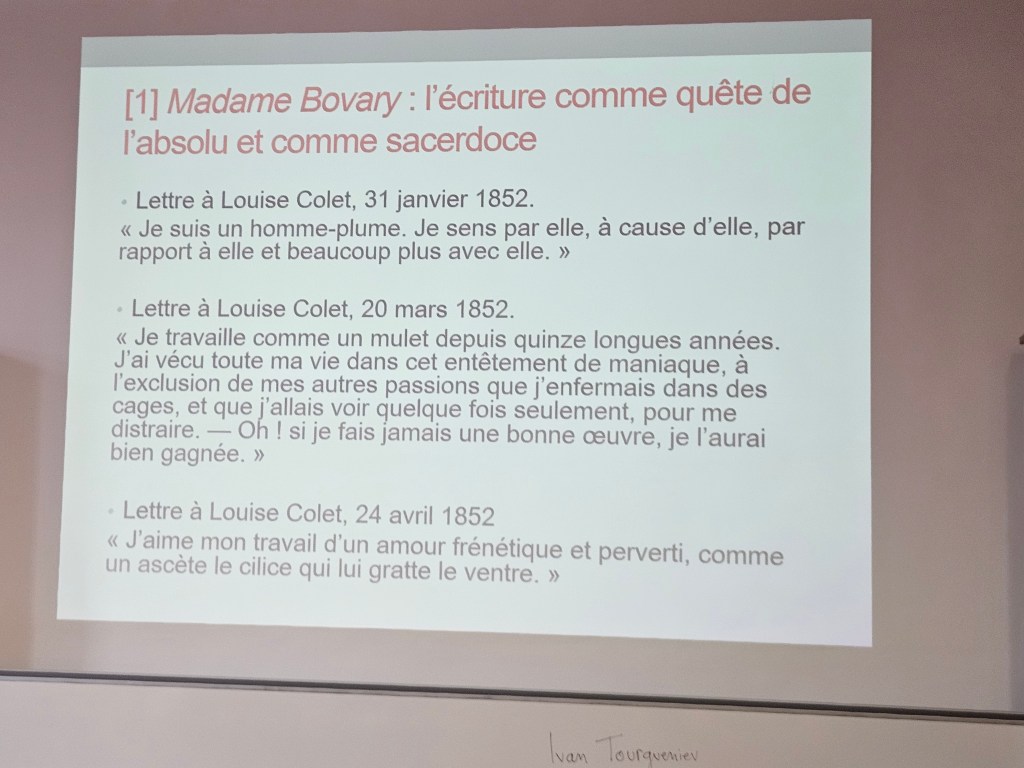
My first lecture of the day is on 19th century French Literature, and this semester we are focusing on Madame Bovary by Flaubert. The lectures here are called CM, which stands for Cours Magistraux (seminars are TD, for Travaux Dirigés) and last between one to two hours depending on the subject. Two hour lectures are a slog for those not used to them, but we have a 10 minute break in the middle to go to the toilet or just take a bit of a mental break. All my courses are taught and examined in French, so concentrating for two hours while translating in my head is taxing, but not as challenging as I worried it might be.
Lecture Recap
11.00-11.45
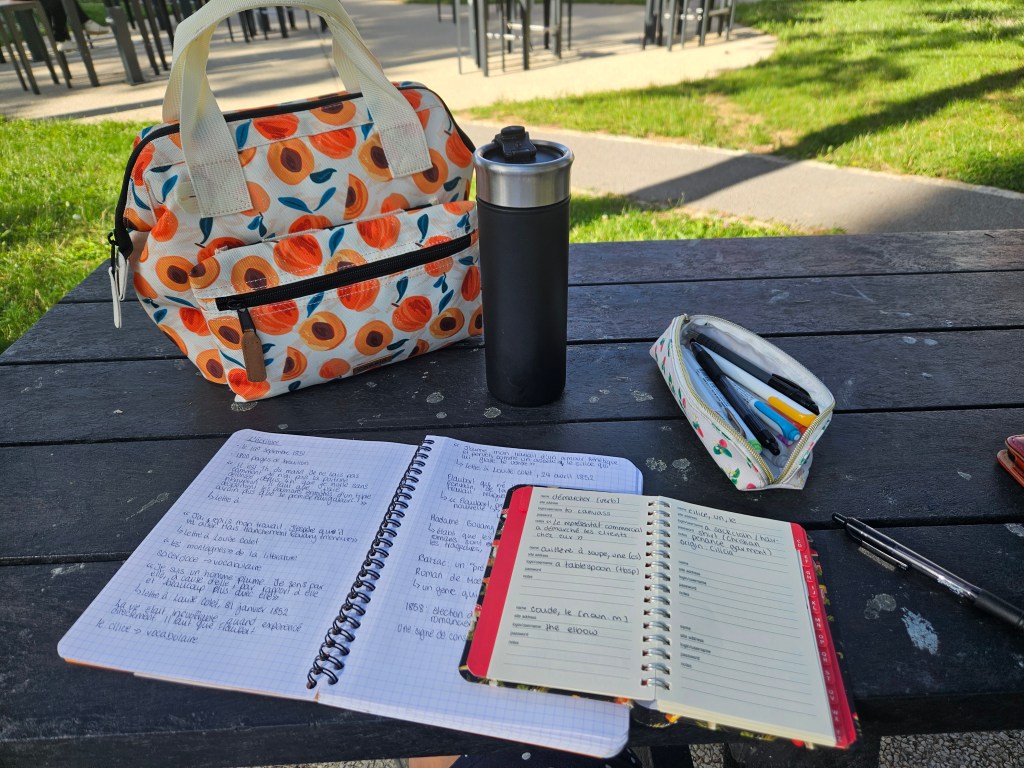
After my lecture I go over my notes, finish my coffee, and look up any vocabulary I wasn’t aware of to add to my personal dictionary. This is an address book in which I write any words I didn’t know when I heard or read them in thr lecture, along with their English translation and an example usage in a sentence. Using an address book is useful as it’s already alphabetically organised, so you can easily find previous words you added. This is really worth carrying around, and I find that I remember words better if I take the time to write them in my address book rather than just looking them up on google translate and then forgetting them immediately afterwards.
Lunch and Rest
11.45-14.30
Some of the time I bring my packed lunch in (there are lots of microwaves for students to use to heat up their food) but mostly I catch the bus back home to eat and then sleep in my flat. This seems pretty unusual for most students, I’d imagine, but as a disabled student I am used to not going about my day in quite the same way in order to accommodate my health needs. Returning home for lunch is part of the French way of life for many office workers and school children, but as we are on a campus university most of my friends find it simpler to stick around for lunch. As an international student I had the freedom to pick and choose my classes, so I have spaced them out in such a way that I am able to rest between morning and afternoon blocks, to avoid the higher risk of seizures that comes with exhaustion.
My afternoon classes start at 14.30, so I make sure I’m all ready for that. This time I fill my coffee flask up with water and change back into my clothes after sleeping. Same bus as before, although they’re less frequent in the afternoons, so make sure to head out a little early. By 14.30 I’m back on campus and at my classroom.
Lecture Two
14.30-16.30
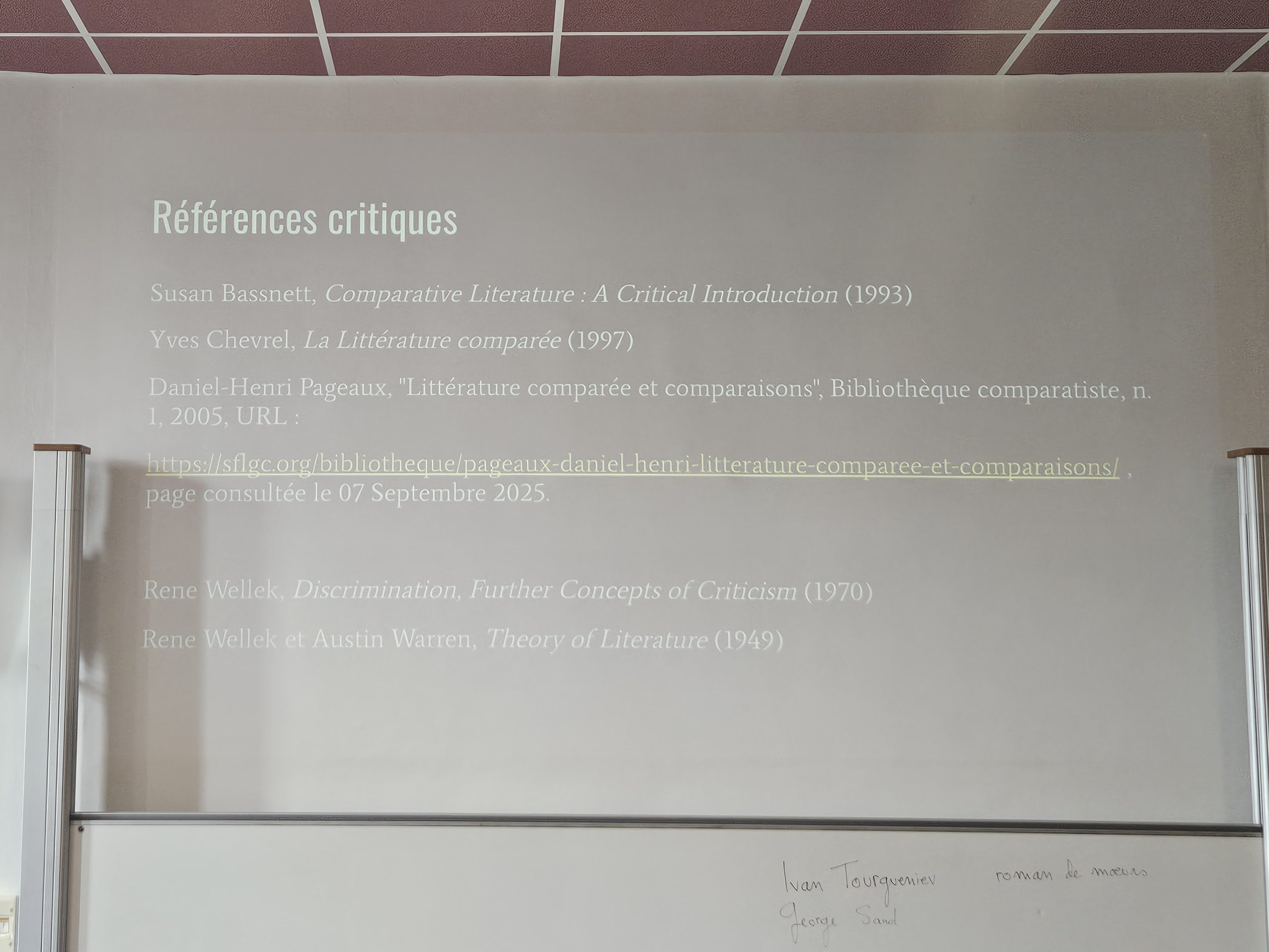
This lecture is on Comparative Literature, which I am finding really interesting. Looking at Edward Said’s Orientalism, and Post-Colonial Theory in geeral, is something that we studied in first year at my home university, so I feel like I’m on fairly stable ground. This gives me the opportunity to focus in more on the language as the content I am already familiar with. One way in which lectures here differ to those in the UK is that the lecturers here tend to ask questions of their students, rather than delivering an uninterrupted sermon. In the whole spirit of “saying yes” I try to contribute whenever I can. I do often find myself unable to articulate my thoughts in French, so I don’t disrupt the class for that, but I note down what I want to say and then later look up the vocabulary for it.
Seminar One
17.00-18.00
I am taking an introduction to Ancient Greek this semester, and this is my last class today. This is a TD, so classes are smaller and we complete more interactive work. This class was on aspiration indicators on vowels as the beginning of Greek words, and we read through several words letter by letter to sound them out, then working out their French counterpart. We also spelled our names in Ancient Greek, which was fun but didn’t take a lot of time for me: when capitalised it turns out that “IONA” is “IONA” regardless of Greek or Latin alphabet.
Home (again)
18.00-18.20
The buses after the final classes of the day are usually absolutely packed, so I usually wait for the second one so I can find a seat. If need be, I ask someone for a seat so that I don’t collapse. If you are also a disabled student studying abroad, make sure that you know the vocabulary you need relating to your health condition so you can communicate when needed.
Dinner and a Call
19.30-20.30
Most weeks I cook a big batch of chilli or soup on the wekends and then freeze it in individual portions to reheat and eat throughout the week for dinner. So far it’s been working very well, and since I also switch it up by making different meals occasionally I don’t find myself getting bored. (I made a gnocchi bake last night, it was sooo good!) My partner is living in London so we make sure to videocall eachother at least once a week to catch up and watch an episode of something together while we each eat our dinner. It’s a way to feel connected, and I love whenever we call.
The Rest of The Evening
20.30-23.00

Now I do a mix of stuff! Sometimes I study or prepare homework for the next day, sometimes I bake (I have been loving this cinnamon oat cookie recipe I found recently, it’s so perfect for autumn and to bring in with my coffee in the morning), sometimes I go out with friends. In the spirit of the blog I am taking as many opportunities as I can to say yes to socialising and meeting new people, but there’s always a balance to be drawn between having fun and making sure I’m well enough to do everything I need to the next day. My big nights out with the Erasmus Student Network are therefore mostly limited to Friday or Saturday evenings, when I have plenty of time to recover from a late night. There are also lots of things like local music nights at the Bibliocafe, or pop up chess evenings at L’Envers du Bocal, so I keep an eye on their socials to add anything interesting to my calendar. This block of time is also when I do my chores: washing up, laundry, taking out the bins etc. Early mornings mean early nights too, so I’m usually all ready for bed by around 11pm.
That’s All Folks!
I hope this has been interesting or useful for those curious, let me know in the comments if there’s anything more you’d like to know!
À bientôt! Iona xx
 J'ai Dit "Oui"
Leave a comment